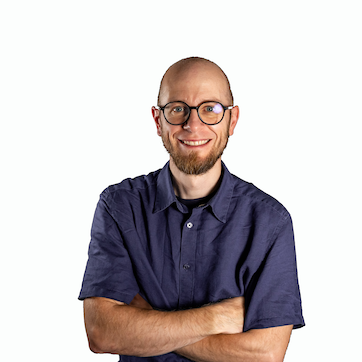
Co-Founder & CEO · AI
Dr. Jakub Tomczak
Generative AI researcher, author of Deep Generative Modeling.

Generative Science Intelligence Lab
We test the drug on every patient's tumor, before enrollment. So your oncology trial enrolls the patients your drug is built for.
The problem
Trials often fail because cohorts mix tumors that can respond with tumors that cannot. Selecting patients by biology changes the odds.
Approval statistics: Wong, Siah & Lo, Biostatistics 2019 (oncology programs 2005–2015). Personalized = patients selected by biomarker or companion diagnostic.
Our approach
From a biopsy to a clear enrollment decision, with the reason why.
Patient-specific omics from tumor or liquid biopsy.
A generative AI model of this patient's tumor, plus twins of healthy organs.
Your drug is tested on the tumor twin and against the healthy organs.
With a mechanistic reason why the patient is in or out.
1–2 weeks from biopsy to report · Non-diagnostic: informs the sponsor only, no approval needed to start
Test each candidate's tumor twin against your drug's target before enrollment.
Build cohorts on tumor biology, not only on indication and histology.
Mechanistic readouts show why a patient is in or out, so stratification has a rationale.
Enriched cohorts can show larger effects with fewer patients, lifting the odds of success.
Evidence
A live, end-to-end pipeline on 23 real breast cancer cases. Pick a drug to see which patients its twin test selects.
Strong-signal patients
*Hypothetical drug (REAL target). Model readouts, not yet clinically validated. Patient positions are illustrative; counts are from the live demo.
Real patients, 260k+ single cells, each turned into a digital twin and compared with twins of 18 healthy organs, across five cohorts and five drugs.
reshaped by the tumor's microenvironment. Tumor biology is condition-dependent, so our twins are built from each tumor's own data.
Read the preprint
Our mission
Ewelina's validated wet-lab protocols and detailed scientific roadmap are in hand. We carry it forward with world-class AI science & engineering, so her work reaches patients.
Her wet-lab science continues to shape GenSiLab, including our latest study on how a tumor's environment reprograms its biology.
The team
Co-Founder & CEO · AI
Generative AI researcher, author of Deep Generative Modeling.
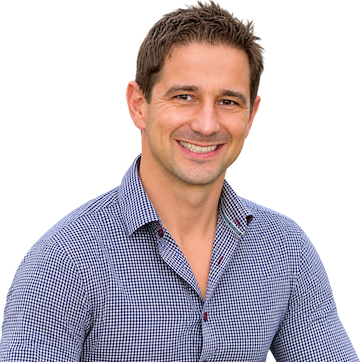
Co-Founder · Strategy
Entrepreneur, founder of Actaware.
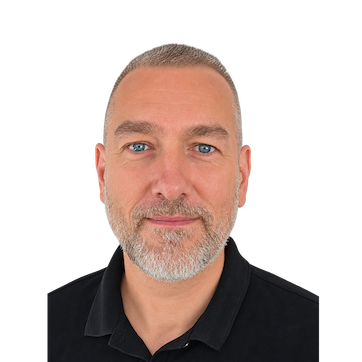
Co-Founder · Engineering
Leads engineering of the digital-twin platform.
Co-Founder · Bio
Wet-lab protocols & scientific roadmap.
News
Work with us
Pharma partners & investors
Let's talk about your next oncology trial.
jakub@gensilab.com GenSiLab on LinkedIn